Align

The Human Augmentation Layer
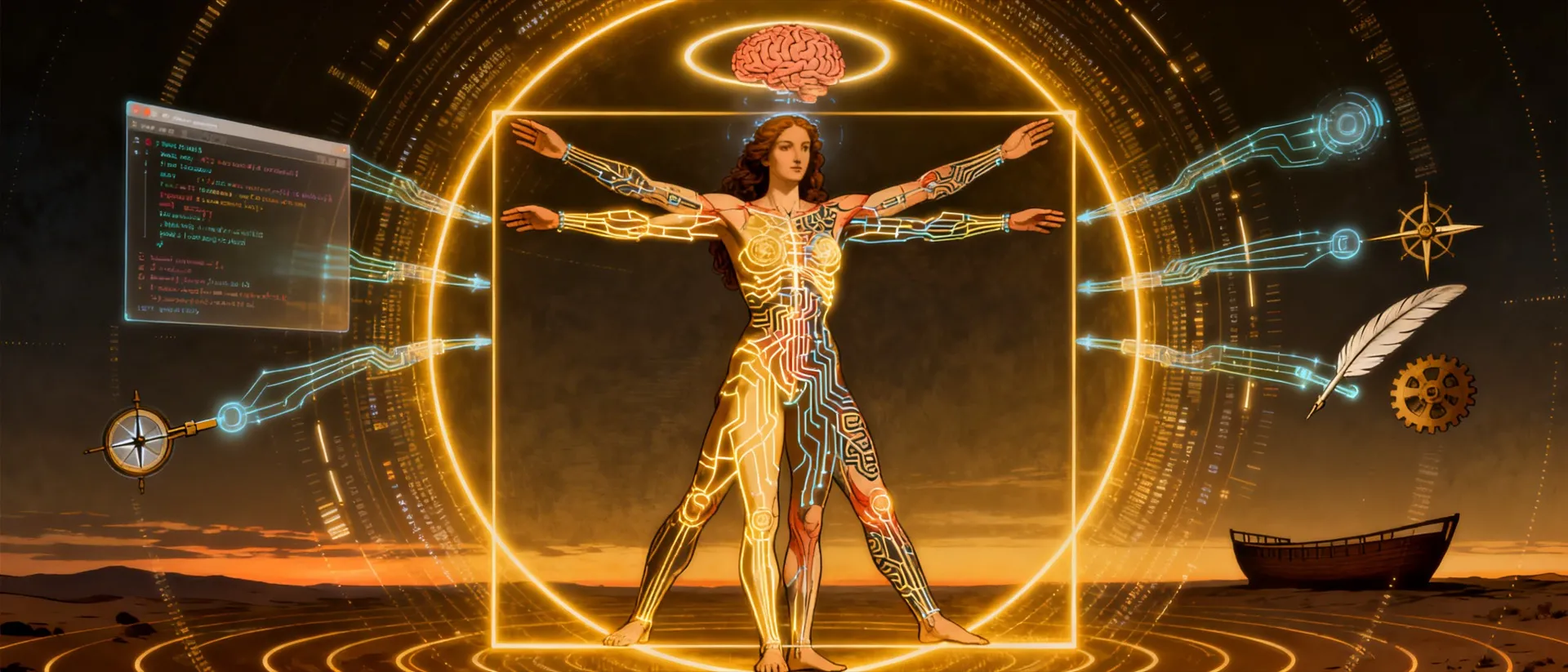
Annex your capabilities.
Agentic flows that map a company’s workflow, identify every friction point that causes drag, and deploy targeted agents to restore momentum — so humans stay in the driver’s seat with superhuman reach.
Augment Humans · Eliminate Drag
by Ark Singularity

Why Alignment Changes Everything

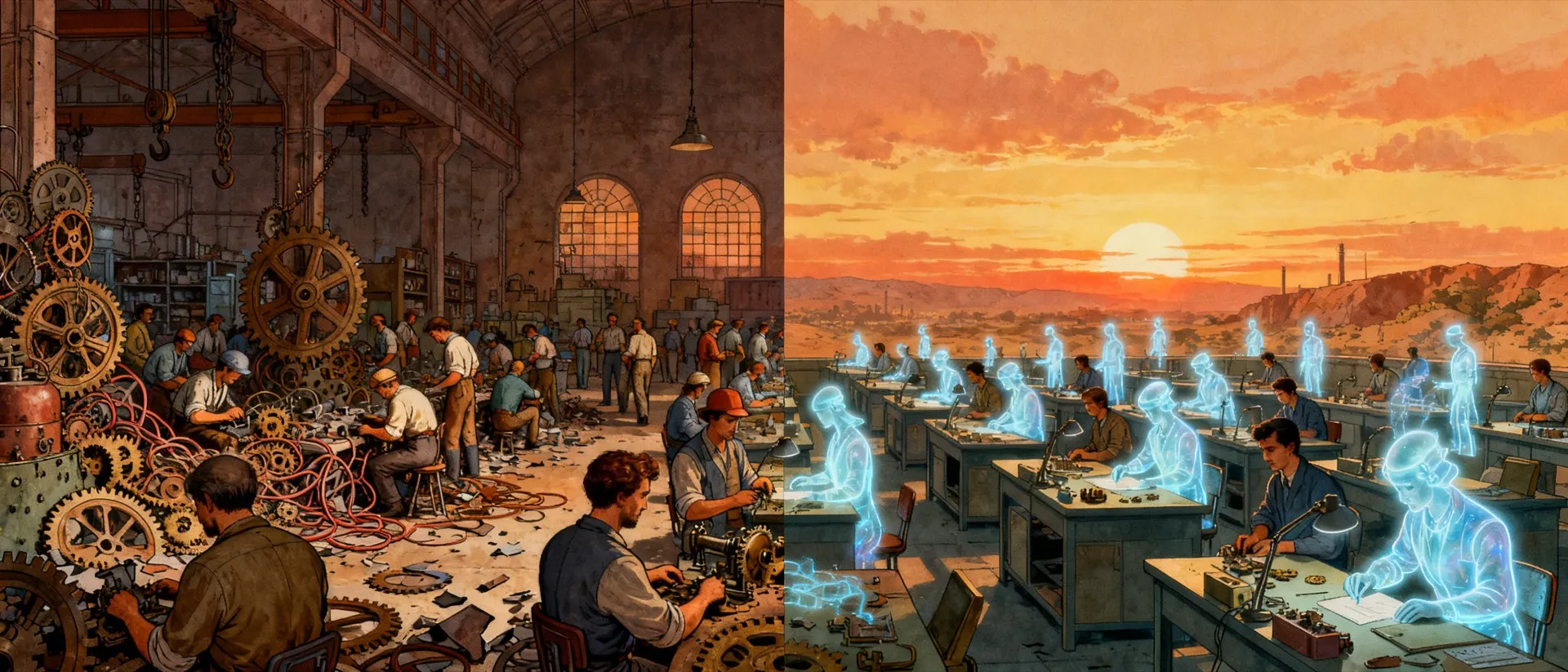
Humans don’t need to be replaced. They need to be amplified. The bottleneck isn’t people — it’s the dead space between their decisions.
Workflow Drag vs Momentum

What is Workflow Drag?

Every workflow has friction points — handoffs that stall, approvals that queue, context switches that bleed focus, and manual steps that should have been automated yesterday. These aren’t failures of people. They’re failures of tooling. The workflow itself creates drag that slows momentum to a crawl.

The Align Thesis

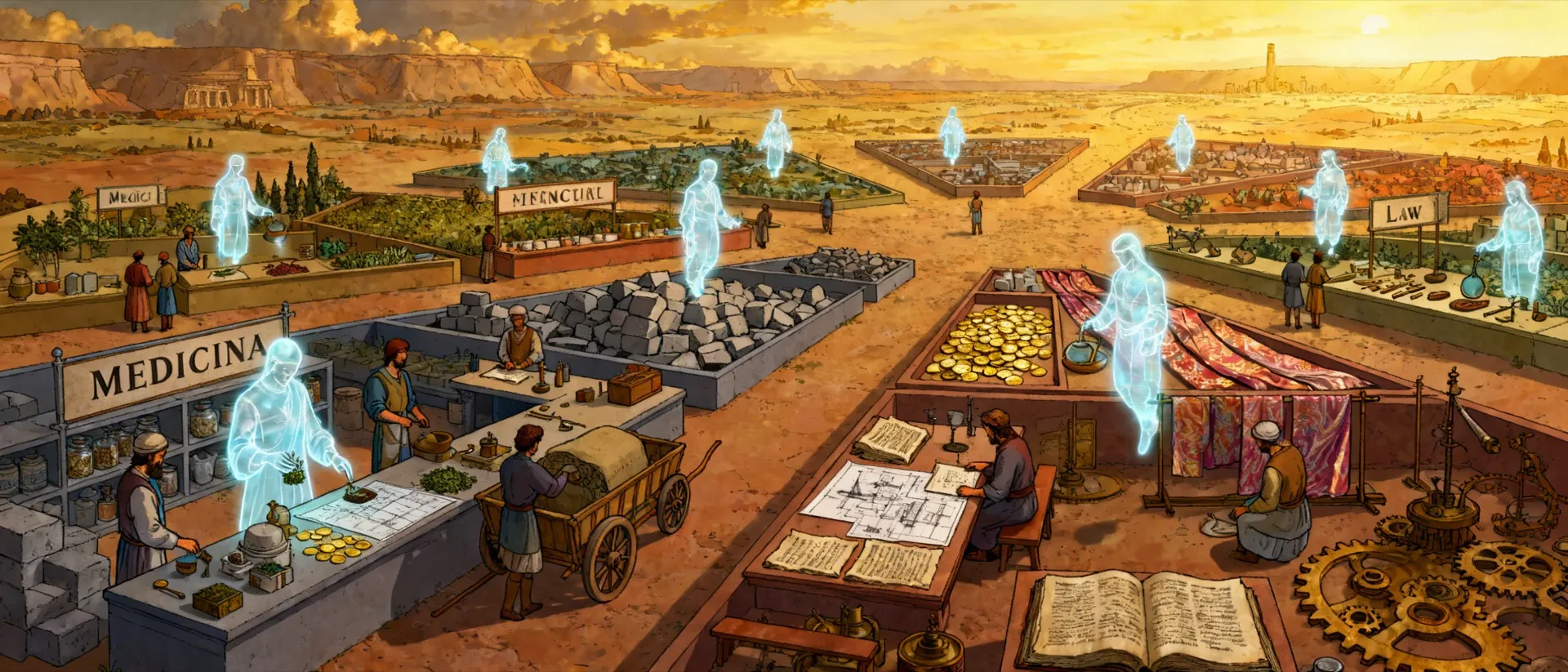
Rather than rip-and-replace, Align patches agents directly into the seams of existing workflows. Each agent handles a specific class of drag — data gathering, status chasing, format conversion, compliance checking — so the human never leaves their flow state. The result: people with the reach of an entire department.

68%
of knowledge-worker time is spent on “work about work” — not the work itself
23 min
average time to refocus after a context switch — the hidden tax on every handoff
5–9x
throughput increase when manual relay steps are replaced with agentic pass-throughs
0
jobs replaced — Align augments the human, not the headcount

The Friction Landscape

Every company has the same drag pattern. The specifics change — the structure doesn’t.
Friction Landscape
Without Align
12+manual handoffs per process
40%time lost to status chasing
3–5tools per task (context switching)
72 hrsavg. approval queue wait
People are busy all day but the work barely moves. The drag is invisible because everyone’s used to it.
With Align
2–3human decision points per process
90%of status updates are automated
1interface — agents bridge the tools
<4 hrsapproval cycle with agent pre-staging
Humans make the decisions. Agents handle everything between decisions. Momentum restored.

The 6 Universal Drag Points

These friction patterns exist in every company, every industry, every workflow. Align patches each one.
Universal Drag Points
01

Handoff Gaps

Work completes in one system but doesn’t arrive in the next. Someone has to manually relay context, copy data, or notify the next person in the chain.

02

Approval Queues

Decisions wait in inboxes. Approvers lack context. Incomplete submissions bounce back. The queue grows while work stalls downstream.

03

Context Switching

Every task touches 3–5 tools. Each switch costs 23 minutes of cognitive reload. The human becomes a human router between disconnected systems.

04

Data Assembly

Before any real work begins, someone spends hours pulling data from multiple sources, formatting it, cross-referencing it, and building the picture manually.

05

Status Chasing

People pinging people to ask “where is this?” Slack messages, follow-up emails, standup updates — all overhead to track what should be self-evident.

06

Compliance Friction

Regulatory checks, format validations, policy gates. Necessary but tedious. Humans do them manually because the tooling never caught up.

The Align Pipeline

Map the workflow. Find the drag. Deploy the agent. Measure the lift.
The Align Pipeline
Phase 1

Workflow Scan

Agents observe the existing workflow end-to-end. Every tool, handoff, wait state, and decision point is mapped into a flow graph. No interviews needed — the work trails tell the story.

Phase 2

Drag Detection

The flow graph is analyzed for friction signatures: queue depth, cycle time spikes, manual relay patterns, tool-switching frequency. Each drag point is scored by impact and patchability.

Phase 3

Agent Matching

Each drag point is matched to an agent archetype from the Align library. Handoff gap? Deploy a Relay Agent. Approval queue? Deploy a Pre-stage Agent. The right agent for the right seam.

Phase 4

Patch & Integrate

Agents are injected into the live workflow via API hooks, browser extensions, or platform integrations. No migration. No retraining. The workflow stays the same — the drag disappears.

Phase 5

Human Calibration

The human reviews agent outputs, adjusts thresholds, and trains the agent on edge cases. The agent learns the human’s judgment patterns. Trust builds through transparency.

Phase 6

Momentum Metrics

Cycle time, throughput, queue depth, and context-switch frequency are tracked continuously. The system proves its own value and identifies the next drag point to patch.

The 5 Patch Agents

Specialized agents that slot into workflow seams and eliminate specific classes of drag
The 5 Patch Agents

Relay

Handoff Bridge

Monitors output of one system and feeds it into the next. Translates formats, adds context, notifies stakeholders. Zero manual relay.

Pre-stage

Approval Accelerator

Gathers all required context before an approval reaches the human. Validates completeness, flags anomalies, and presents a decision-ready package.

Assembler

Data Synthesizer

Pulls data from multiple sources, cross-references, formats, and delivers a unified brief. Turns hours of tab-switching into seconds of reading.

Pulse

Status Tracker

Continuously monitors progress across all active items. Proactively surfaces blockers, updates dashboards, and eliminates “where is this?” messages.

Guard

Compliance Gate

Validates outputs against regulatory rules, format standards, and policy requirements before they leave the workflow. Catches issues before they compound.

Annex Your Capabilities

Programming tools and agent aid let every person operate at the scale of a team
Capability Annexation

Code Generation

Active

Describe what you need in natural language. The agent writes, tests, and deploys scripts, automations, and integrations on your behalf.

Data Pipelines

Active

Point at your data sources. The agent builds ETL flows, transformations, and dashboards — no SQL or Python required from the human.

Document Drafting

Active

Agents pull context from the workflow, draft proposals, reports, and communications in the human’s voice and style. Review and send.

Research Synthesis

Ready

Given a question, agents search internal and external sources, synthesize findings, and deliver structured briefs with citations and confidence scores.

Workflow Building

Ready

Non-technical users describe a process. The agent translates it into an automated workflow with triggers, conditions, and actions. No-code, agent-built.

API Integration

Ready

Agents discover available APIs, handle authentication, build connectors, and wire systems together. The human approves — the agent implements.

Testing & QA

Planned

Before any deliverable ships, agents run validation suites, edge-case checks, and regression tests. Quality at machine speed, human judgment at review.

Training & Onboarding

Planned

New team members get a personal agent that knows the workflow, the tooling, and the institutional knowledge. Interactive onboarding at the speed of questions.

Universal Across Industries

The same drag patterns, the same patch agents — different workflows
Universal Across Industries

Professional Services

Drag: proposal assembly, client status updates, compliance reviews
Agents: Assembler builds proposals from templates + CRM data. Pulse tracks deliverables. Guard validates SOW compliance before send.
Result: consultants spend time consulting, not formatting

E-Commerce

Drag: inventory sync, order routing, vendor coordination
Agents: Relay bridges marketplace APIs to fulfillment. Pre-stage validates orders before warehouse handoff. Pulse monitors stock levels across channels.
Result: operators manage exceptions, not routine

Healthcare

Drag: prior auth, chart prep, referral coordination
Agents: Pre-stage assembles patient context before appointments. Guard validates coding compliance. Relay routes referrals with complete documentation.
Result: clinicians spend time with patients, not paperwork

Financial Services

Drag: KYC assembly, regulatory reporting, cross-department data requests
Agents: Assembler pulls KYC docs from multiple vaults. Guard runs compliance checks in real-time. Relay bridges front-office to back-office systems.
Result: analysts analyze, compliance self-validates

Manufacturing

Drag: supplier comms, quality inspection routing, production scheduling
Agents: Relay syncs supplier updates to production schedules. Pre-stage packages QC results for engineering review. Pulse tracks order progress across the floor.
Result: engineers engineer, agents handle logistics

Software Teams

Drag: ticket grooming, PR review queues, release coordination
Agents: Assembler enriches tickets with context from codebase + docs. Pre-stage prepares PRs with test results and impact analysis. Pulse tracks sprint velocity in real-time.
Result: developers develop, agents handle the process

The Align Transformation

What changes when every human has an agent layer
The Align Transformation

Before Align

People are the glue between disconnected systems
Context switching consumes 40% of productive time
Scaling means hiring more people to handle more handoffs
Expertise is bottlenecked in a few key individuals
Automation requires 6–12 month IT projects
Work about work drowns out the actual work
People burn out from tedium, not from challenge
vs

After Align

Agents are the glue — humans are the decision-makers
One interface, one flow — agents bridge the tools
Scaling means deploying more agents, not more headcount
Agent aid lets every person access institutional knowledge
Agents deploy in days and learn on the job
Humans do human work — judgment, creativity, relationships
People are challenged by meaningful problems, not logistics

The 4-Layer Augmentation Stack

Each layer builds on the one below. Align starts at L1 and works upward.
Augmentation Stack
L1

Workflow Map

Scan and model the existing workflow: tools, handoffs, decision points, and timing. This is where Align begins. You can’t patch what you can’t see.

L2

Drag Patching

Deploy agents into identified friction points. Relay, Pre-stage, Assembler, Pulse, and Guard agents eliminate the dead space between human decisions.

L3

Capability Annexation

Humans gain programming-level power through natural language. Code gen, data pipelines, document drafting, research synthesis — all agent-aided, human-directed.

L4

Adaptive Flow

The agent layer learns from human decisions and continuously optimizes the workflow. New drag points are detected and patched automatically. The system improves itself.

Implementation Roadmap

From single-workflow patches to company-wide augmentation
Implementation Roadmap

Phase 1

Active

Single workflow mapping. Deploy Relay + Pulse agents. Prove momentum gains on one critical path.

Phase 2

Ready

Full agent suite deployment. Pre-stage, Assembler, Guard added. Cross-tool integration via API hooks.

Phase 3

Building

Capability annexation layer. Code gen, data pipelines, document drafting available to every team member.

Phase 4

Planned

Multi-workflow orchestration. Agents coordinate across departments. Company-wide momentum metrics.

Phase 5

Vision

Adaptive flow intelligence. Self-optimizing workflows. Agents that propose and implement process improvements autonomously.

Vision Ark Singularity

Every Human Has Untapped Reach.
Align Unlocks It.

Align doesn’t replace people. It gives them superpowers. From patching workflow friction to annexing programming capabilities, every person in the company gains the operational reach of an entire team. The work that matters gets done. The drag disappears. Momentum becomes the default.
Augment Every Human